Confidential
A service platform for public-sector social work teams
Product Design · 2025 - 2026
Context
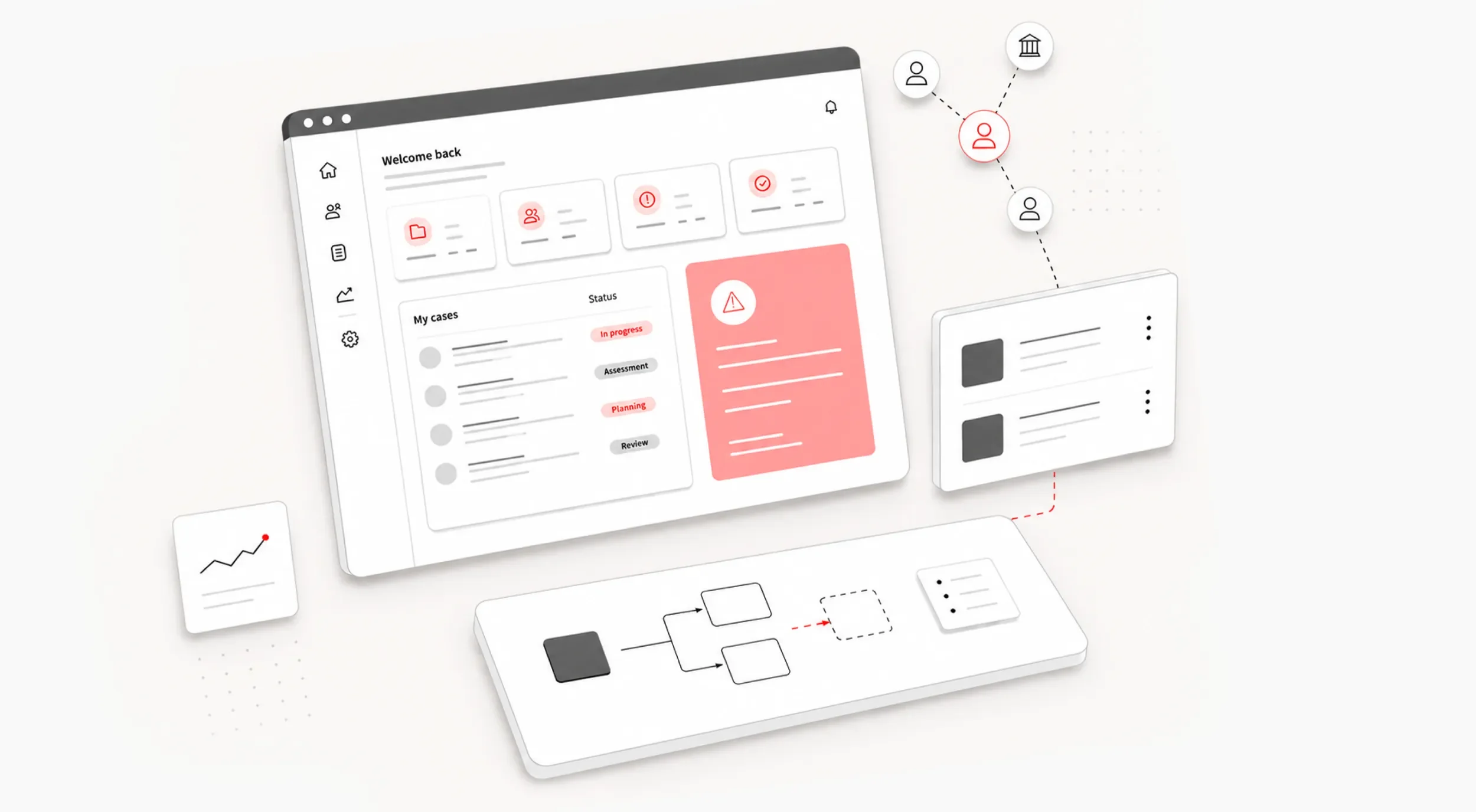
An NDA-protected project for the design of a digital platform used by social services professionals across multiple municipalities.
The product supported sensitive case work, helping teams record information, coordinate interventions and follow vulnerable people through complex care processes.
Role
As the sole product designer on the project, I led the end-to-end experience and translated regulated, sensitive and highly complex workflows into a clear, safe and scalable tool.
My role also included functional analysis for key features, defining requirements and working closely with developers to iterate towards a phased implementation.
Impact
The solution helped professionals reduce operational burden while preserving control, traceability and quality in decision-making.
Technology - including AI-assisted features was designed as a support layer, helping teams spend less time on administrative work and more time applying judgement, care and presence with the people they supported.
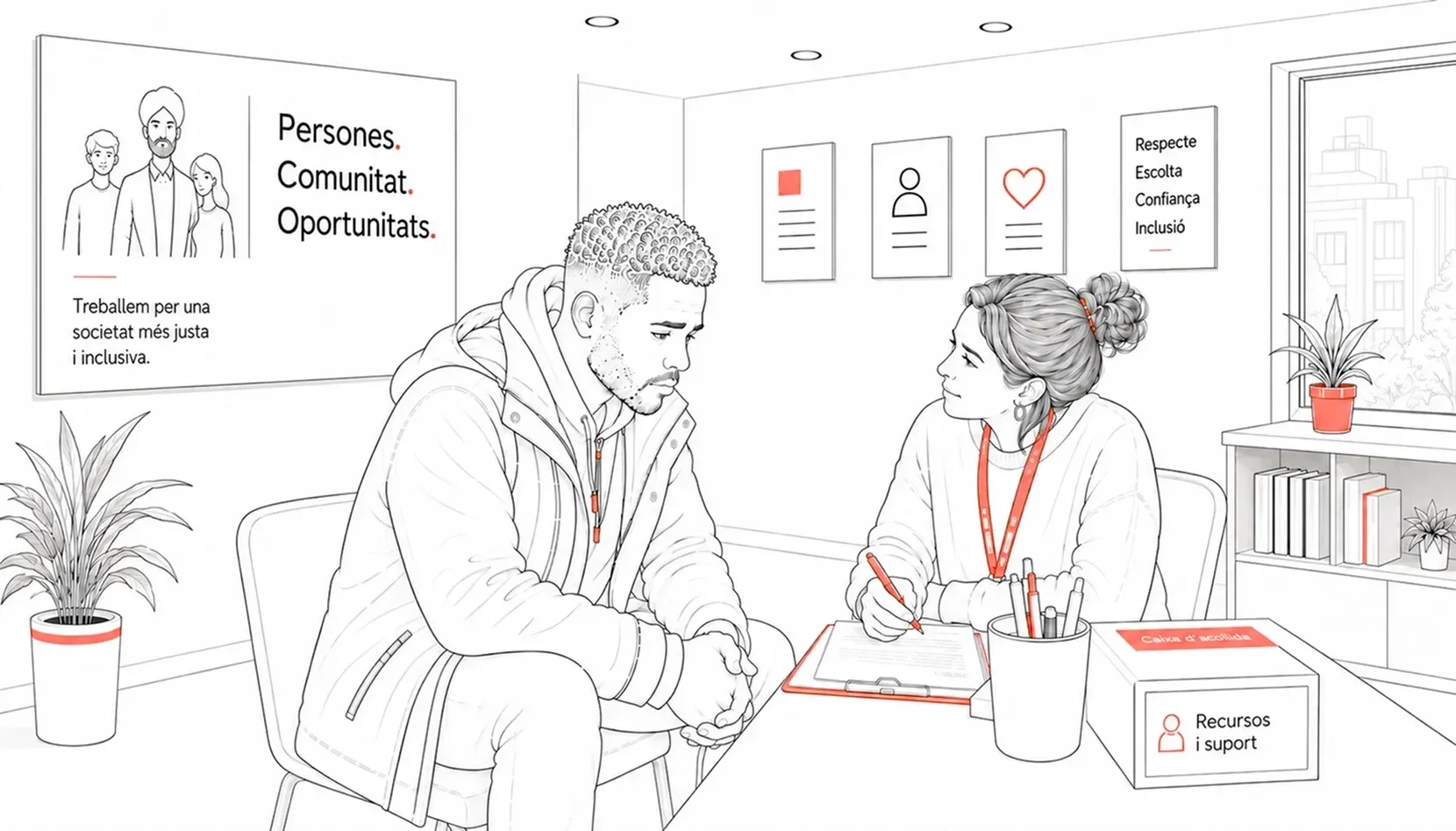
Designing for social services means designing around complexity, sensitivity and trust.
Professionals need to understand each person’s context, record sensitive information and coordinate support across regulated and emotionally complex situations.
Design decisions
Due to NDA restrictions, I cannot share the project name, real screens, wireframes, internal workflows or specific data.
The following diagrams are high-level reconstructions of key design decisions, product logic and rationale behind the solution. All visuals are representative of the sector, and examples have been anonymized or reformulated to protect confidential project information.
01. Adapting the flow to support interconnected cases
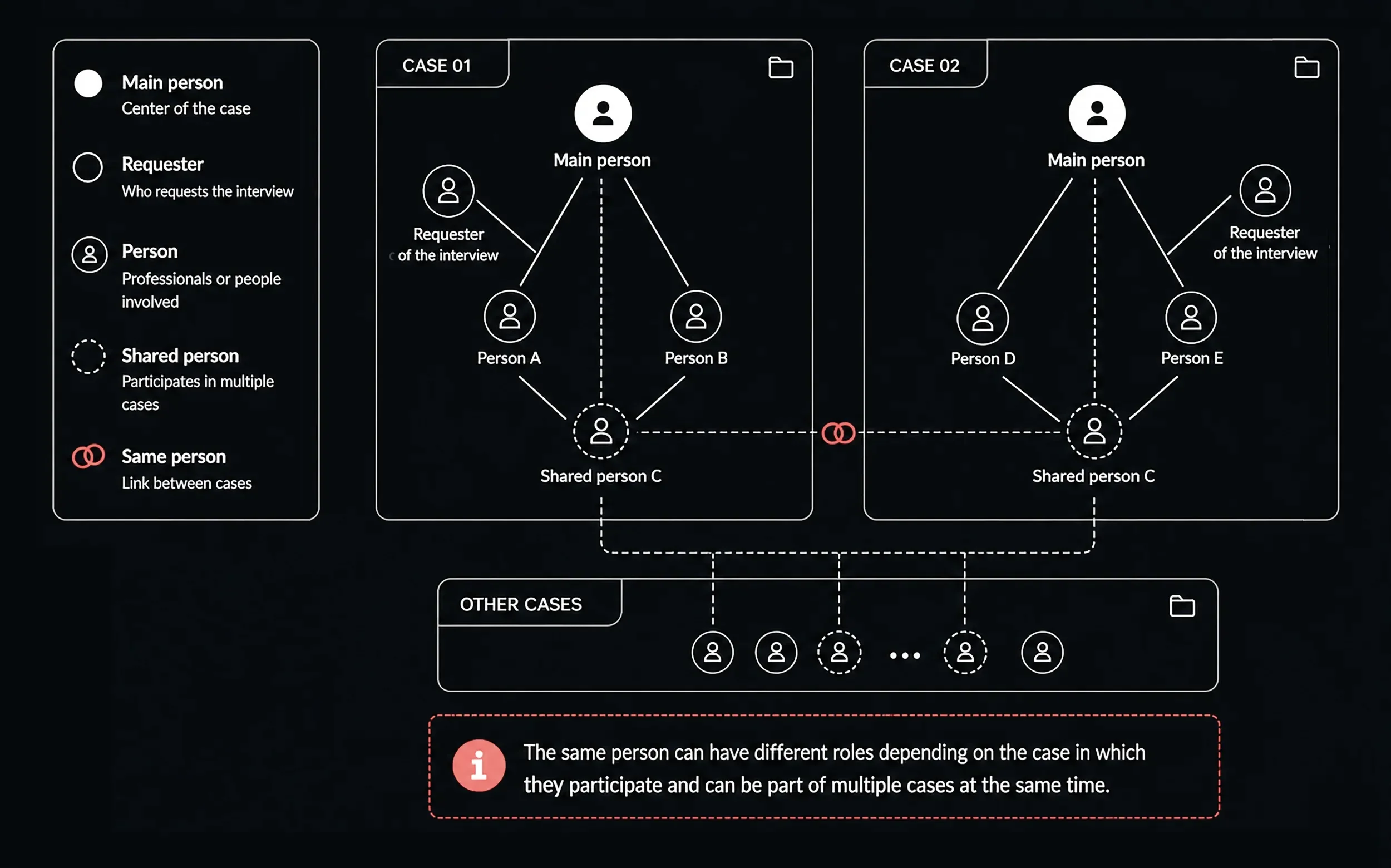
Adapt the platform’s cross-functional flow to support multiple people within the same case, while keeping the relationship with the main person clear in each context and making the network of people, roles, and contexts understandable without creating duplicates.
Problem
The initial flow was designed for a more linear interaction, but the real context required managing cases where several people could be linked to the same process and take on different roles depending on the situation.
Solution
I redesigned the flow to make it possible to identify the reference person, understand who was initiating the process, and consult other linked people without overloading the interface. I also defined patterns to avoid duplicates and select the right context before continuing.
Result
The solution made the relationships between people easier to understand, reduced association errors, and helped keep information linked to the appropriate context.
02. Make critical information actionable
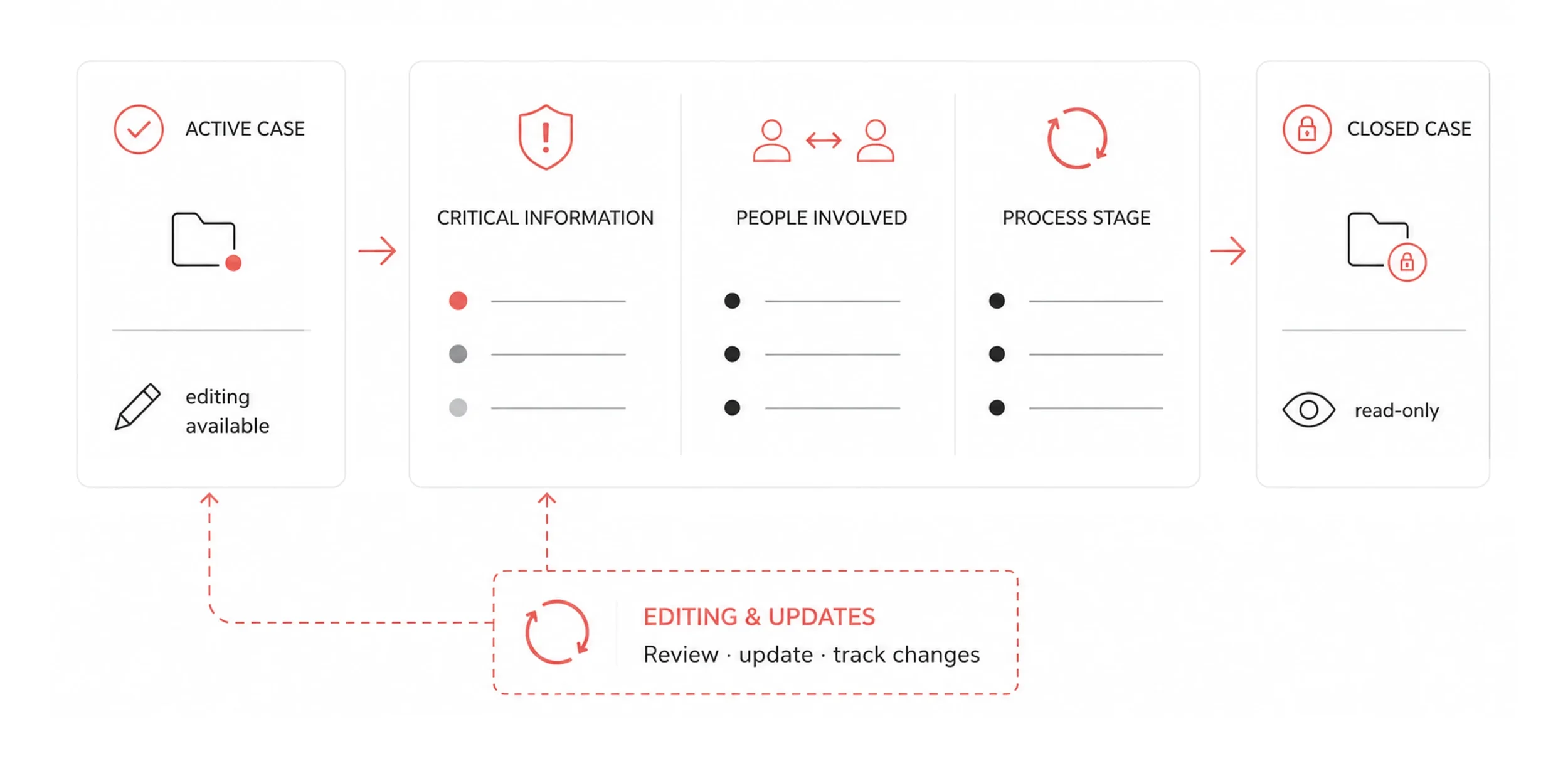
Make critical information visible without turning it into static data: it needed to evolve, but only under safe conditions.
Problem
Professionals needed to quickly identify critical case information - such as risk level, people involved, and overall status - and update it as the situation evolved. At the same time, improper changes had to be prevented once the case was no longer active.
Solution
I defined a visual hierarchy so that critical information was visible at a glance and proposed a conditional editing logic: sensitive fields could only be modified while the case was active. This made it possible to keep the information up to date without compromising control over the process.
Result
The solution helped professionals quickly understand the status of the case, reduced misinterpretation, and ensured that sensitive information was only modified at the appropriate moments.
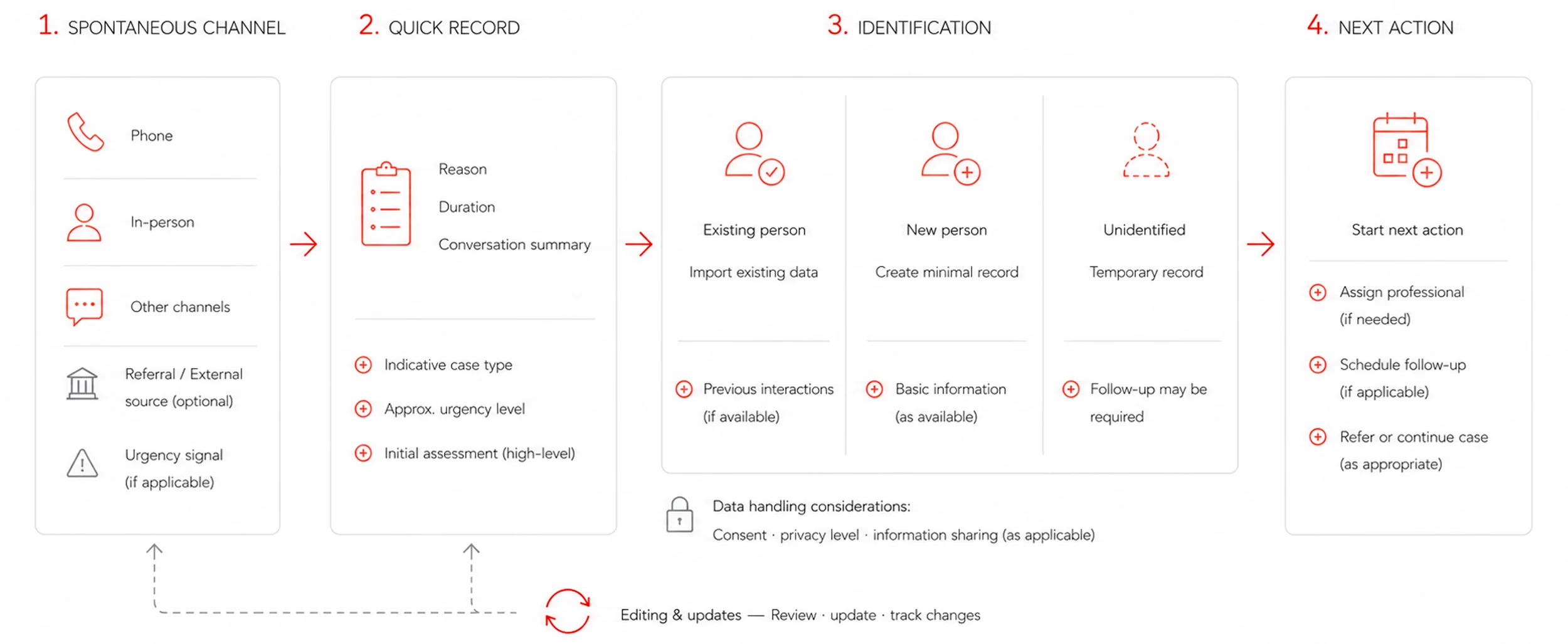
03. From ad hoc support to structured case continuity
Problem
Social workers handled many valuable interactions that did not fit formal formats such as interviews or meetings, including calls, spontaneous consultations, walk-ins, and brief follow-ups.
Because these interactions were not connected to the case history, relevant information could be lost, and part of the professionals’ daily workload remained invisible and difficult to measure.
Solution
A specific form was defined to record this type of interaction, including details such as duration, a summary of what had been discussed, and any possible follow-up actions.
A shortcut to create an interview was also included, as many of these one-off interactions could lead to a new appointment or a more formal follow-up.
Result
This decision helped capture information that could previously remain invisible and made it easier to turn a one-off interaction into a structured follow-up action.
It also gave professionals a more complete, cross-cutting record of each person’s interactions, while helping them understand how their time was being used across different types of daily support.
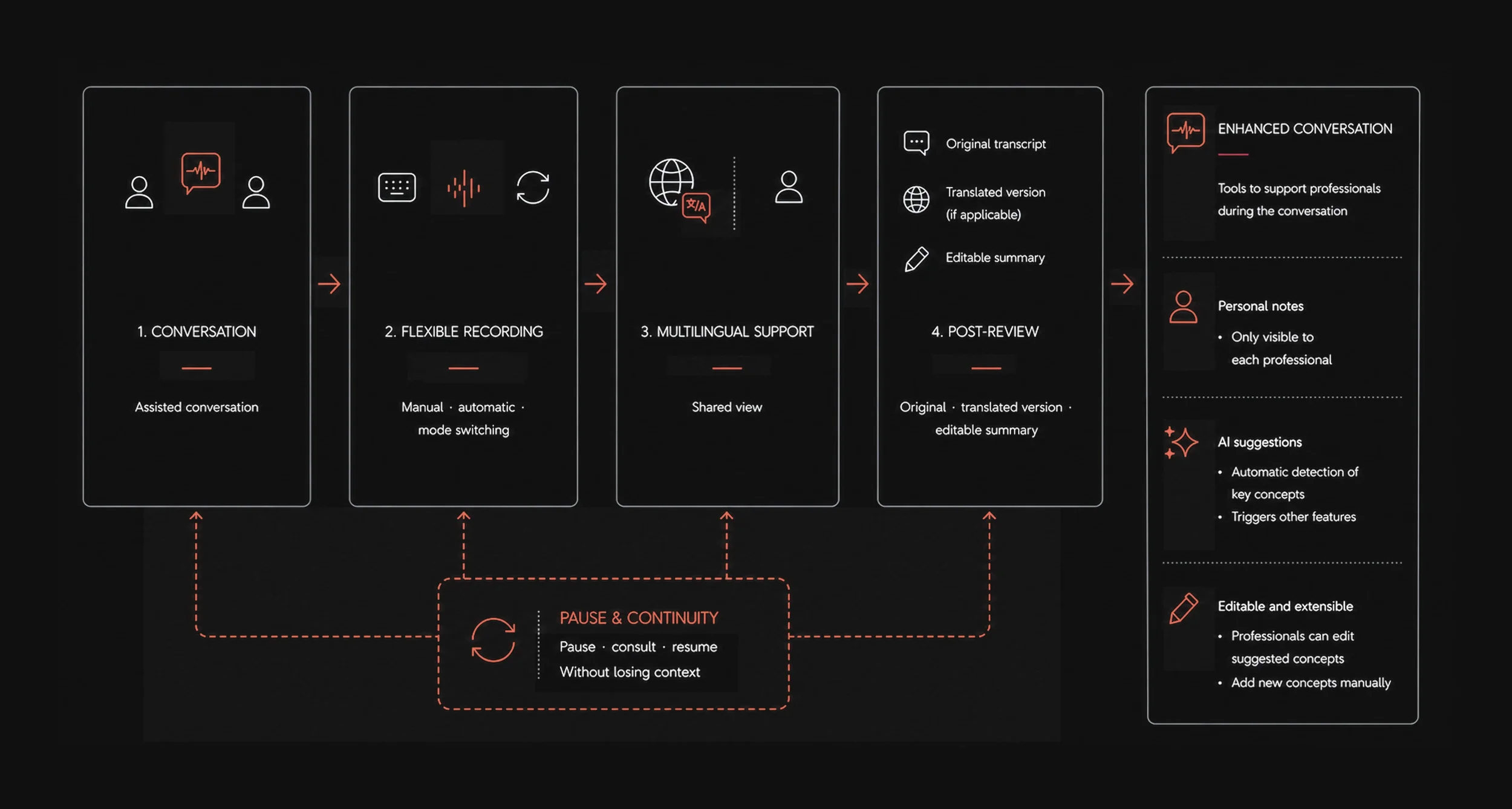
04. Fluid, accessible AI interviews
Problem
During sensitive conversations, professionals needed to capture key information without losing focus on the person they were supporting.
The flow also had to support multilingual contexts and prevent information from being lost when pausing, switching modes, or consulting related data.
Solution
I designed an assisted recording flow combining manual input, automatic capture, and translation support.
Professionals could pause, resume, consult linked information, and switch recording modes without losing context. The system preserved the original transcript, processed version, and editable summary separately.
Result
The solution reduced manual workload, helping professionals stay more present during care sessions.
It also reduced language barriers, saved time with automatic summaries, and made post-session review faster and clearer without compromising the original information.
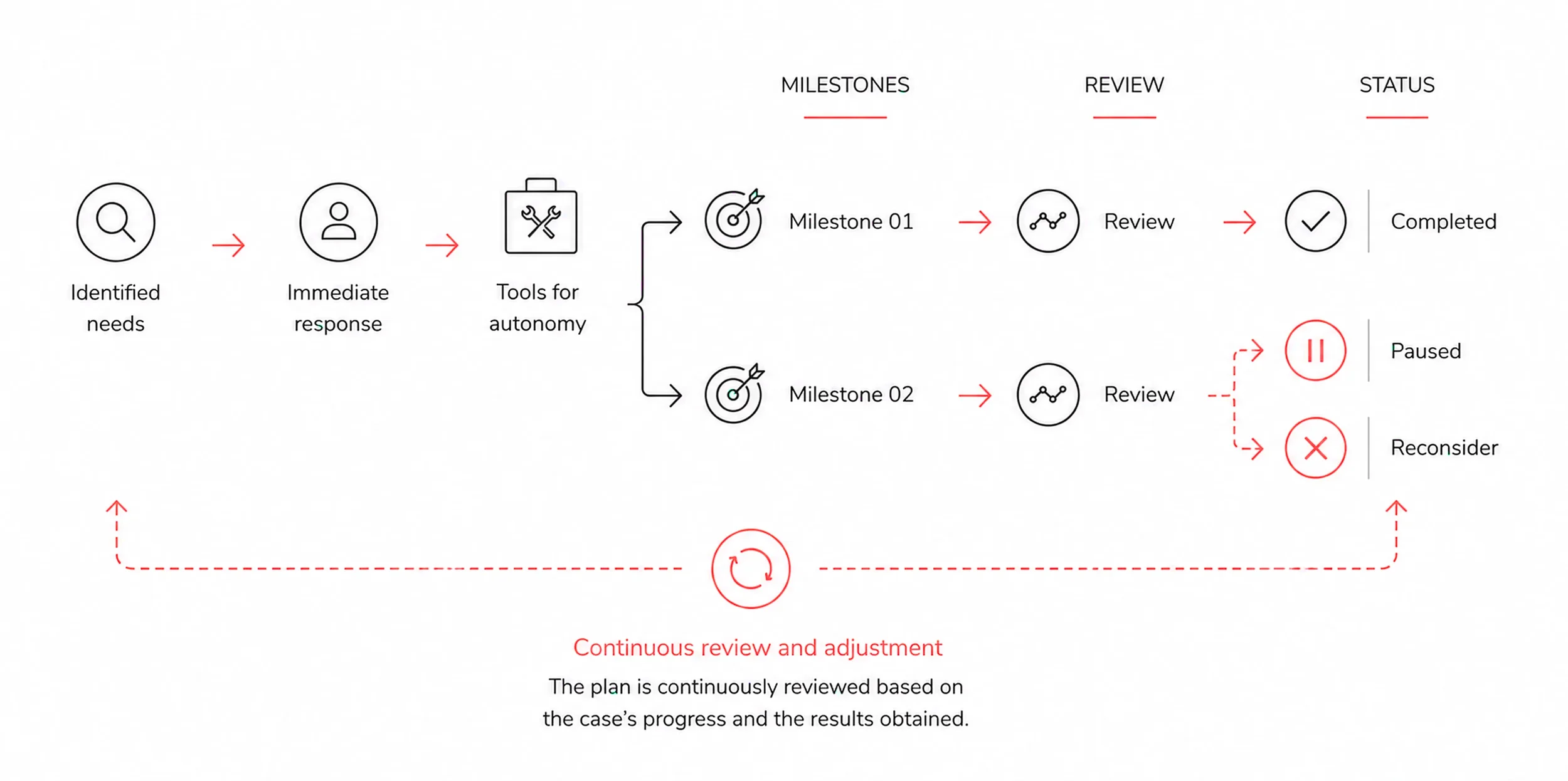
05. Turning records into actionable plans
Create a workflow that felt native to social workers’ daily practice, using familiar terminology and mirroring how they structure cases, define goals, and review progress
Problem
Professionals needed to move beyond a passive case record and have a tool to define goals, review actions, and track each case over time.
The challenge was to design an active follow-up flow that reflected how social workers identify needs, set priorities, and support people in building autonomy.
Solution
I designed this functionality from scratch, based on a standardized social work flow and insights gathered through sessions with professionals and sector users.
I defined a structure connecting needs, immediate responses, autonomy-building tools, goals, and continuous review. Each goal included a status to show whether it was completed, paused, in progress, or needed to be reassessed.
Result
The solution transformed the case record into an actionable follow-up tool.
It helped professionals structure interventions around needs, goals, actions, and progress, supporting better continuity of care and a more empowering support model.
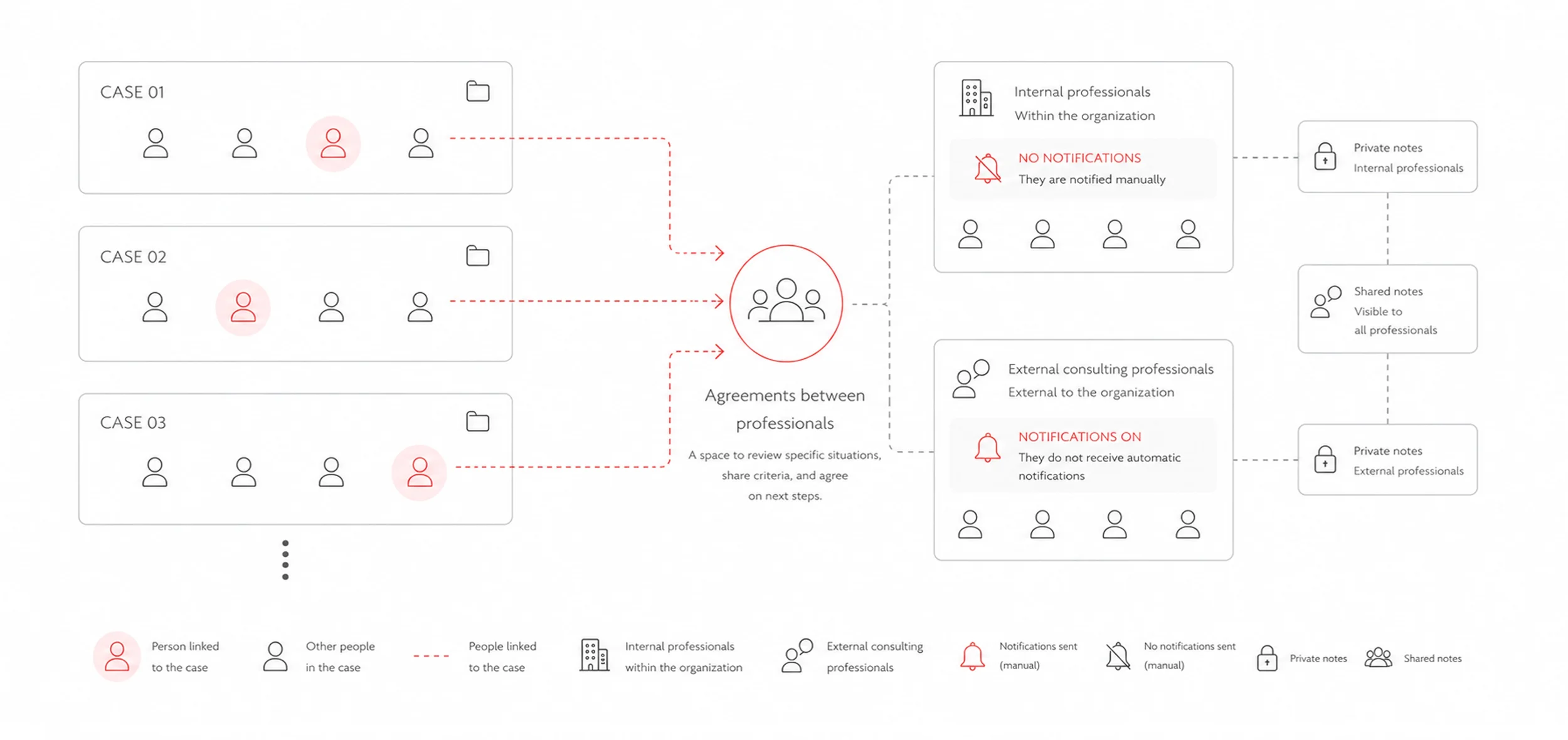
06. Support shared agreements and decisions
Problem
Meetings needed to support internal and external professionals, each with different notification and editing capabilities.
External participants did not receive in-app notifications, creating a risk of communication gaps. There was also no clear model to prevent multiple internal users from editing the same meeting at once.
Solution
I designed the meeting management functionality from scratch, defining the core flows, roles, and edge cases.
The interface used contextual warnings to show when external participants had to be contacted manually, and a temporary locking pattern to prevent simultaneous editing conflicts.
I also defined private and shared notes, giving users control over information visibility.
Result
The new flow gave teams a clearer way to create, manage, and follow up on meetings.
It reduced communication gaps with external participants, prevented editing conflicts, and made meetings more flexible through recurring scheduling and automatic notifications for internal professionals.
Reflections
This project reinforced the importance of designing with care in complex public-service environments, where clarity, traceability and trust are as important as usability.
It also pushed my role beyond interface design, combining product thinking, functional analysis and close collaboration with developers to turn sensitive workflows into a scalable tool.