Protect the Wild
A learning experience for wildlife visitors
Concept Design · 2026
Context
Barcelona Zoo was exploring how digital experiences could support a more meaningful visit, helping people understand the animals beyond basic facts or passive observation.
Role
The project started from a group Design Thinking process. I later revisited and fully redesigned the concept independently, developing the current interaction model, visual direction and UI.
Impact
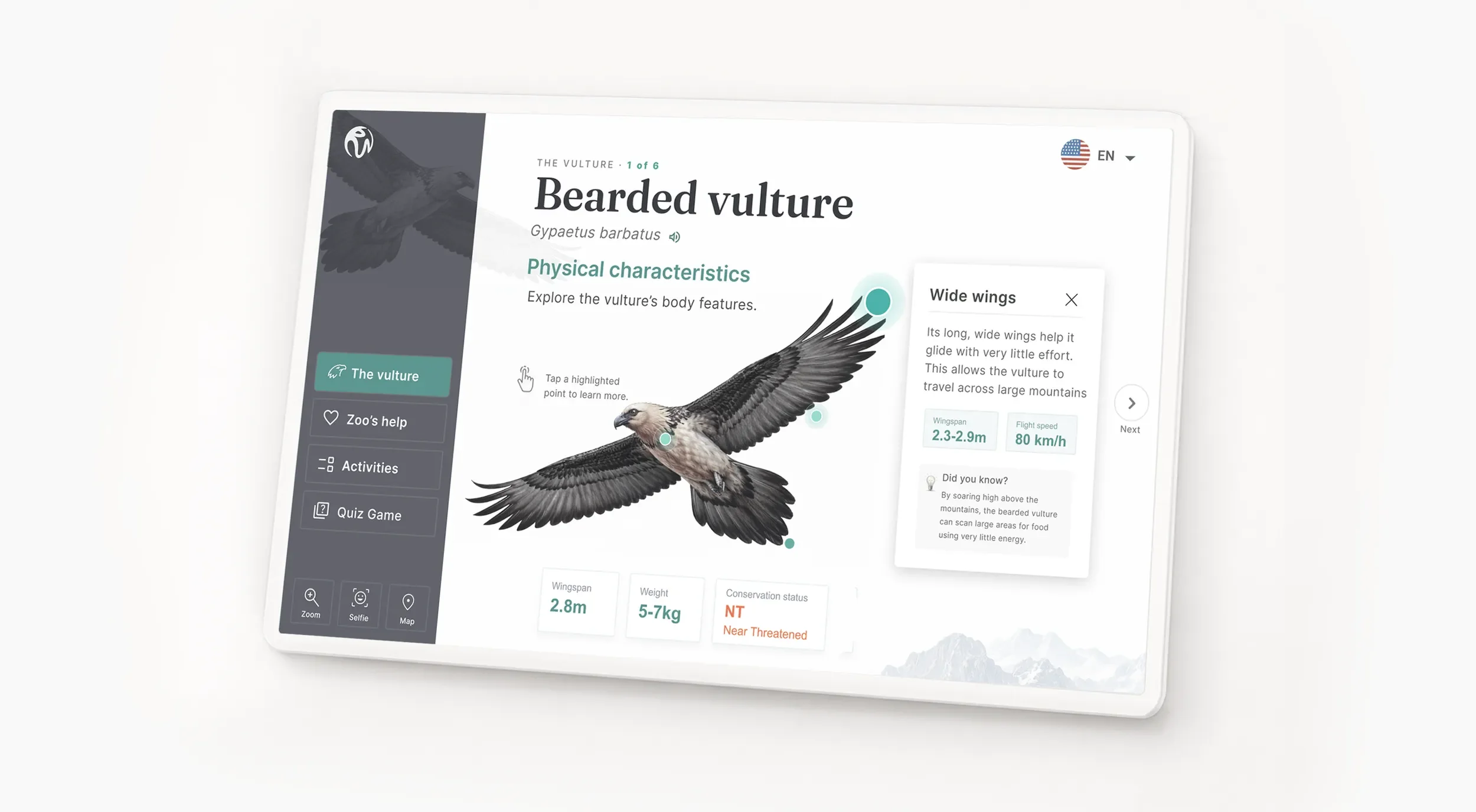
The proposal turns each animal display into an interactive learning touchpoint, helping visitors explore species, habitats and conservation actions during the visit.
Zoos need to move beyond entertainment.
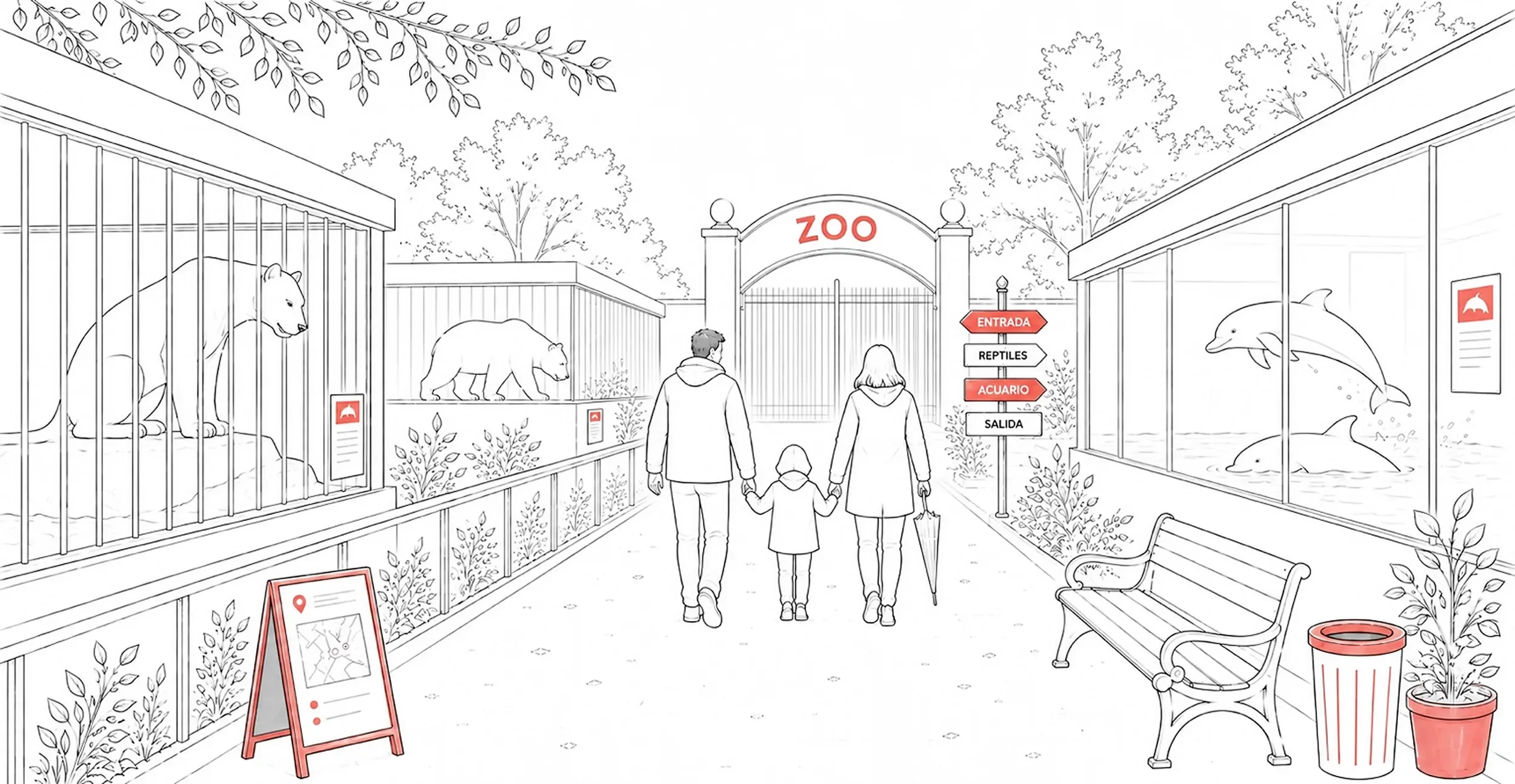
Barcelona Zoo is no longer perceived as the cultural attraction it once was.
As expectations around animal welfare evolve, zoos are being pushed to reduce the number of species, create better habitats and communicate a stronger conservation purpose.
Zoo displays are static and passive.
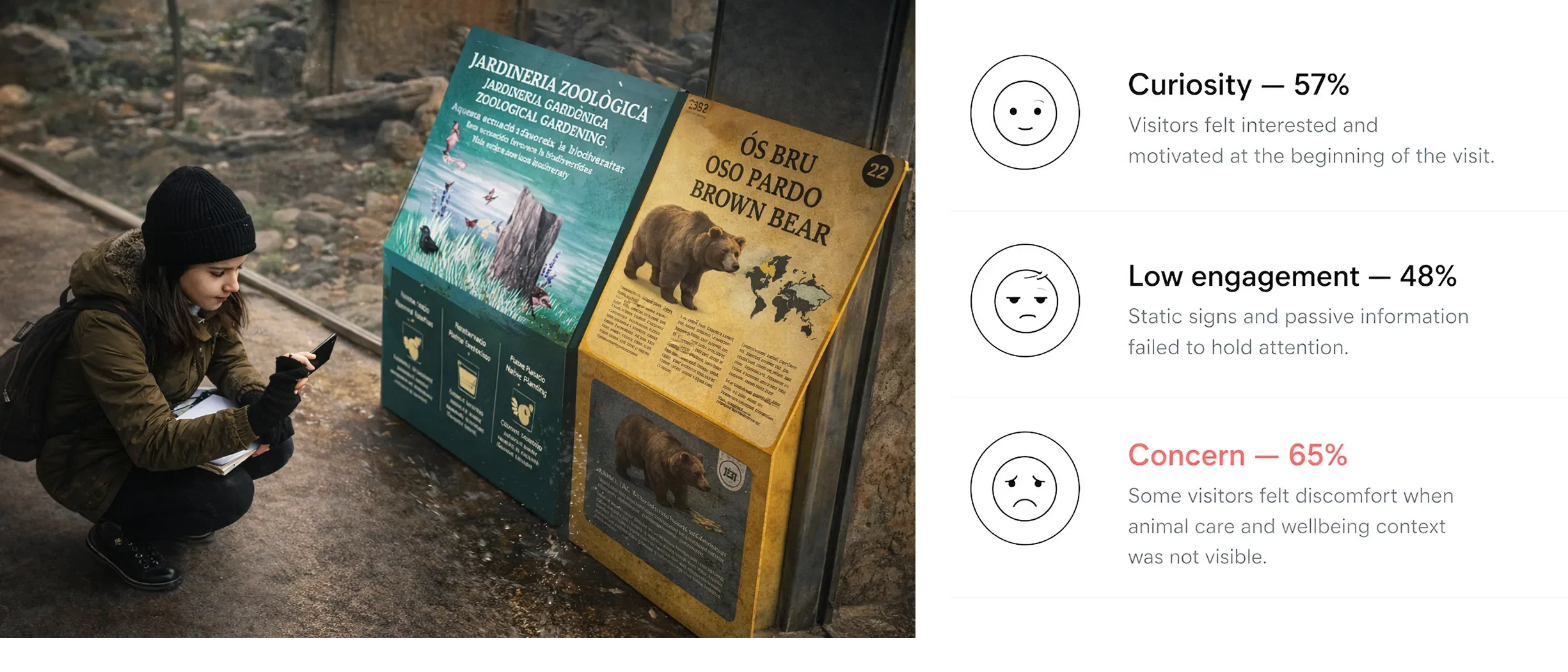
Visitors come to learn, but leave feeling uncomfortable
Research showed that visitors were curious at the beginning of the visit, but engagement dropped when information was hard to find, passive or disconnected from the animals’ wellbeing and conservation context.
The experience ends with disconnection.
Arrival
Visitors need clearer directions.
Static signs fail to hold attention.
Static content
Animal enclosure
Animal care context is not visible.
Zoo impact
Positive impact feels unclear.
Skeptical
Visitors lack a clear way to help or a reason to return.
End of visit
Unfulfilled
Bored
Concerned
Confused
So, how might we rethink the zoo experience?
Transform static species displays into interactive touchpoints that let visitors explore information through curiosity, age and level of interest.
01
Make learning more active and memorable through playful interactions, visual storytelling and challenges designed for children and families.
02
Connect each visit with the zoo’s conservation role, helping visitors understand, care and find simple ways to contribute beyond observation.
03
The interactive experience
The key opportunities were translated into an interactive screen concept that turns static animal displays into active learning moments. Visitors can explore each species, understand the zoo’s conservation role and connect the visit with care and action.
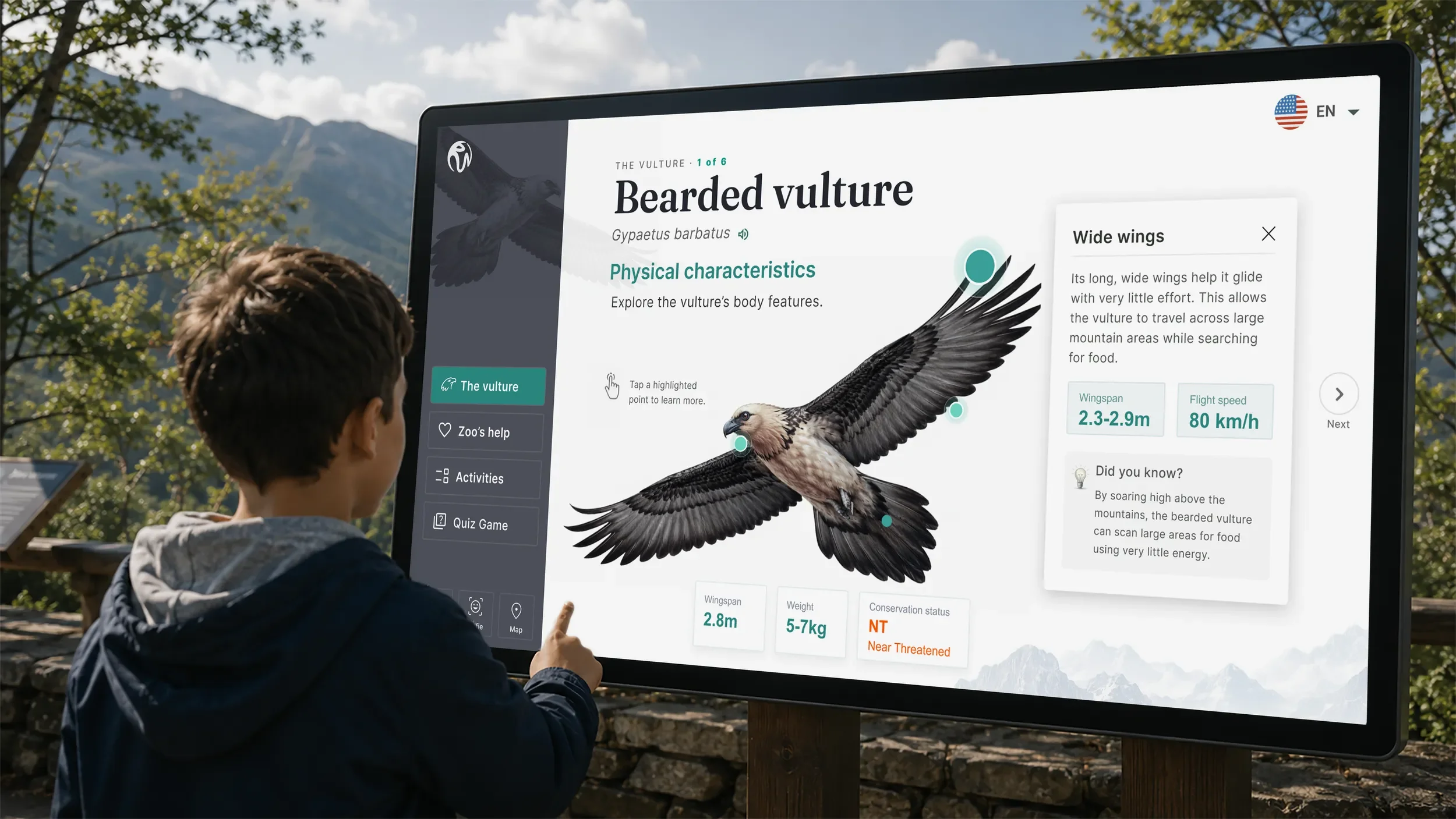
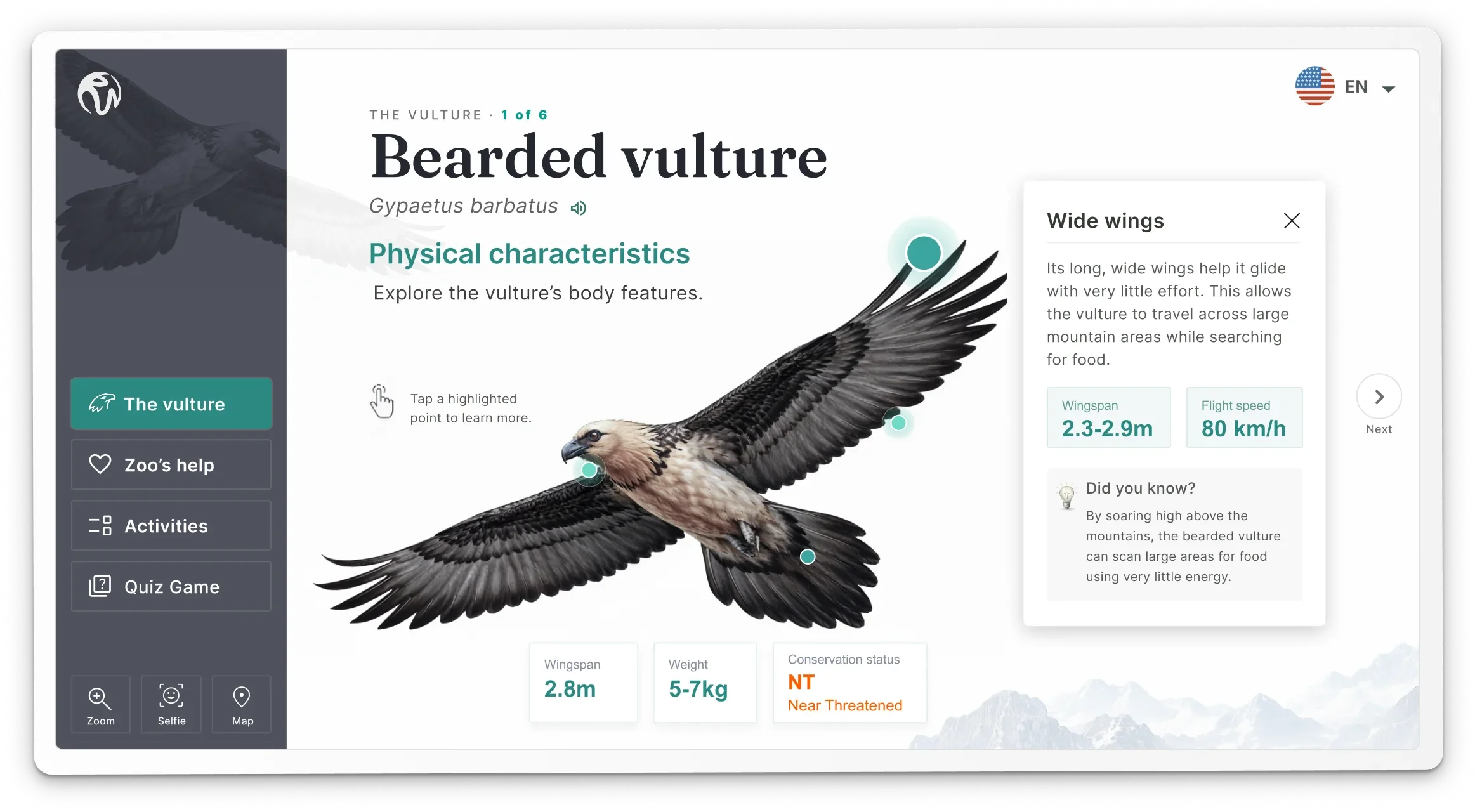
Discovering the species
I used hotspots, sound and bite-sized facts to make discovery more playful and memorable.
Main screens
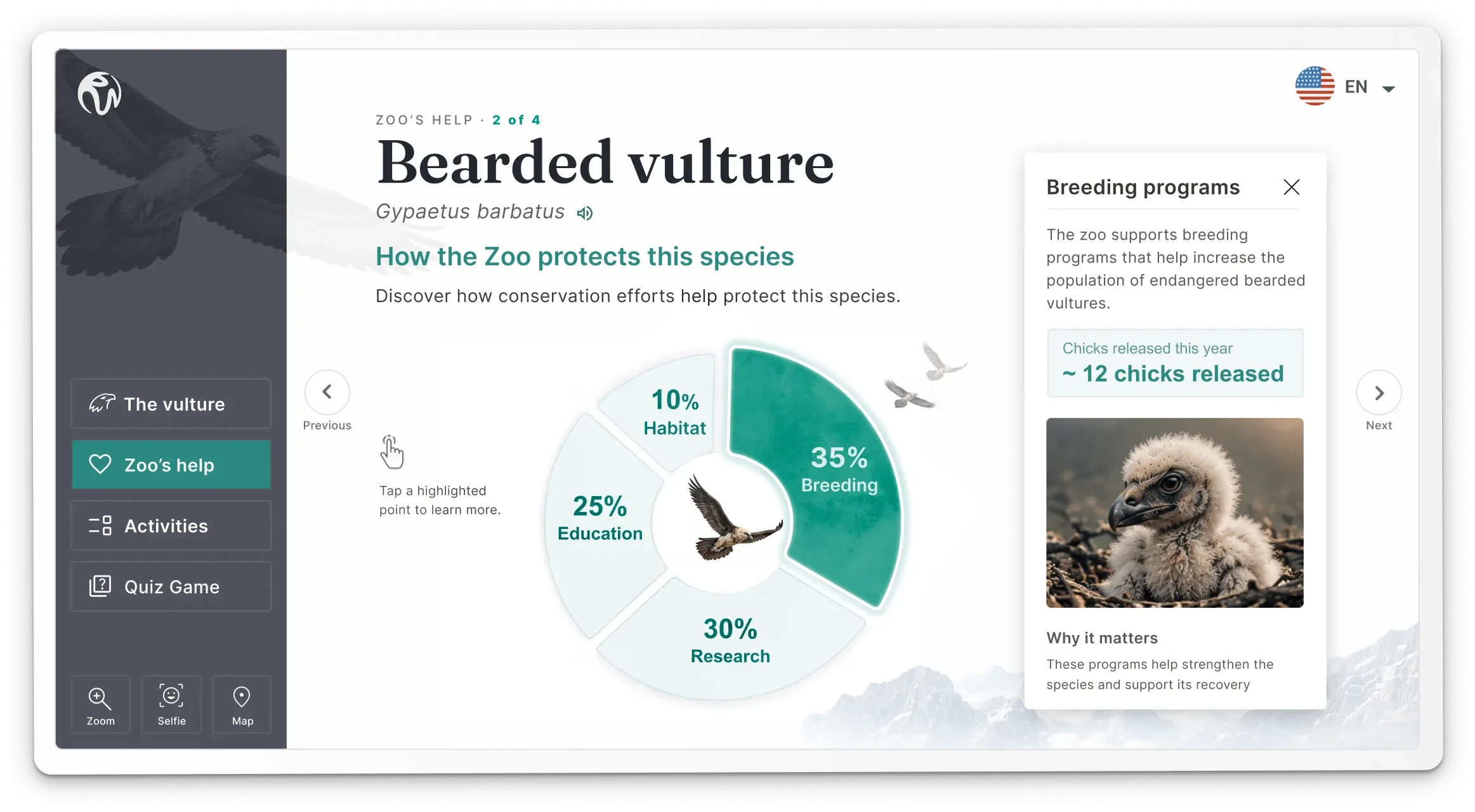
Reframing the zoo’s role
The conservation status screen explains its risk level and the zoo’s role in protecting it.
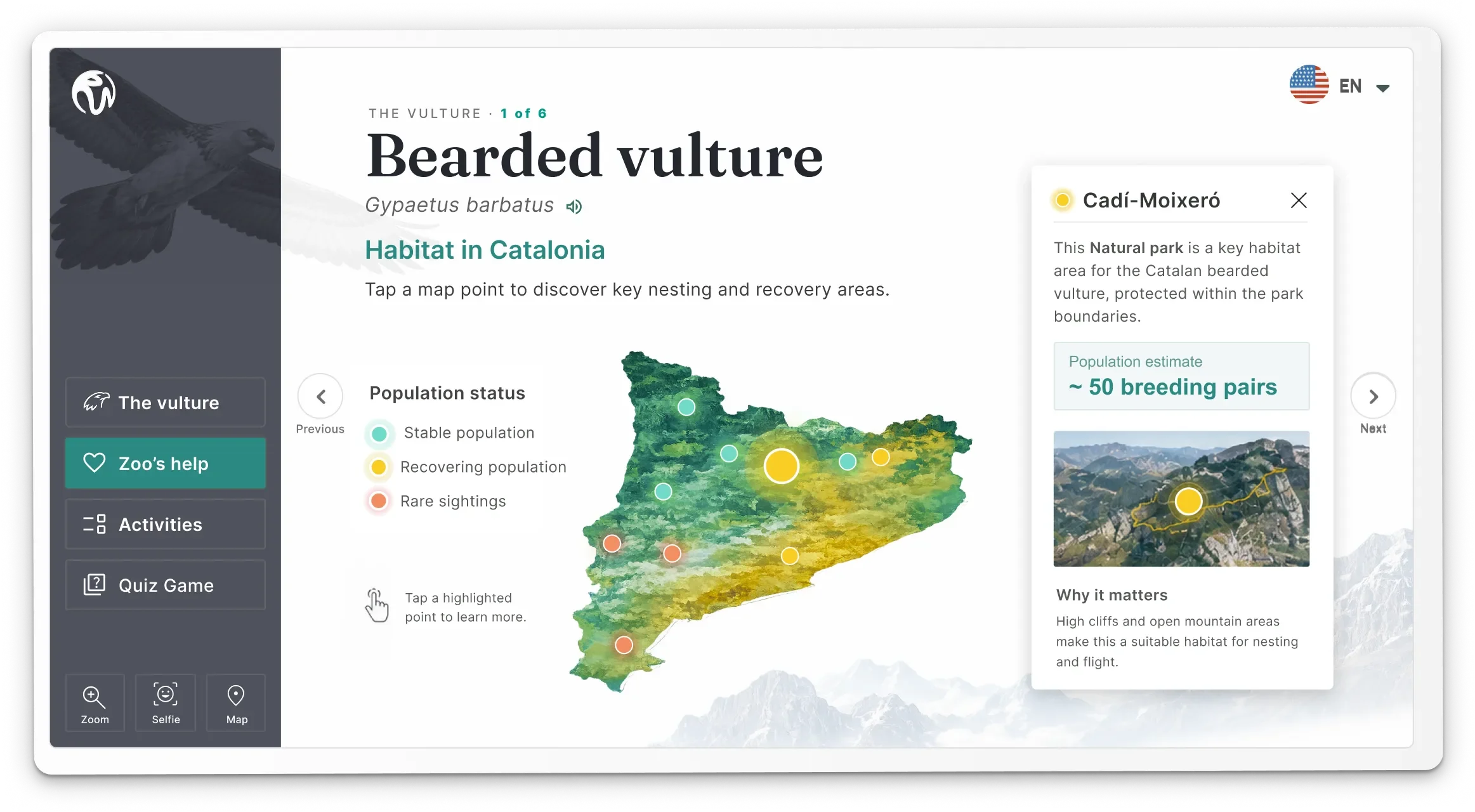
Mapping local habitats
The map connects the species with real habitats, nesting areas and recovery zones in Catalonia.
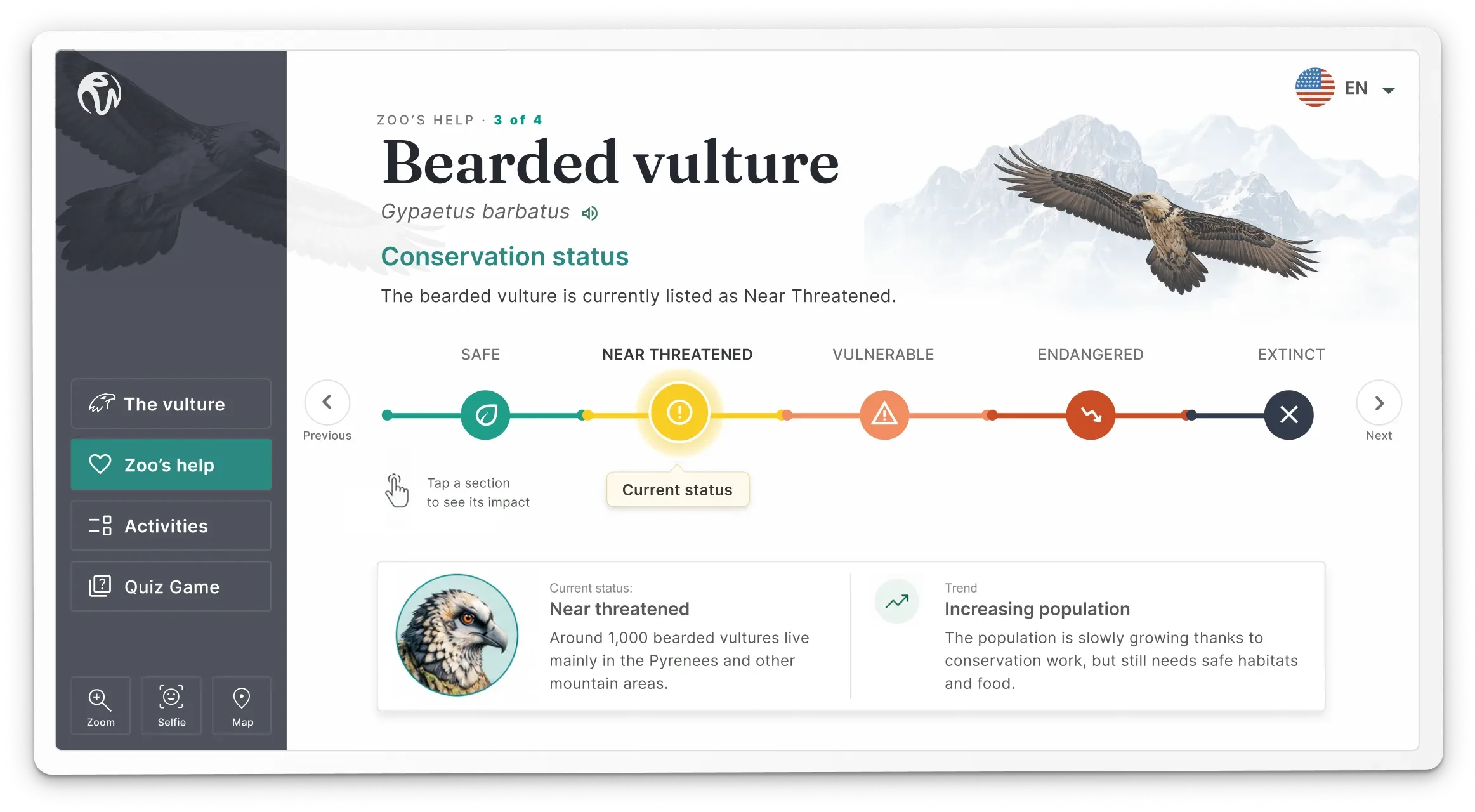
Reframing the zoo’s role
The conservation status screen explains its risk level and the zoo’s role in protecting it.
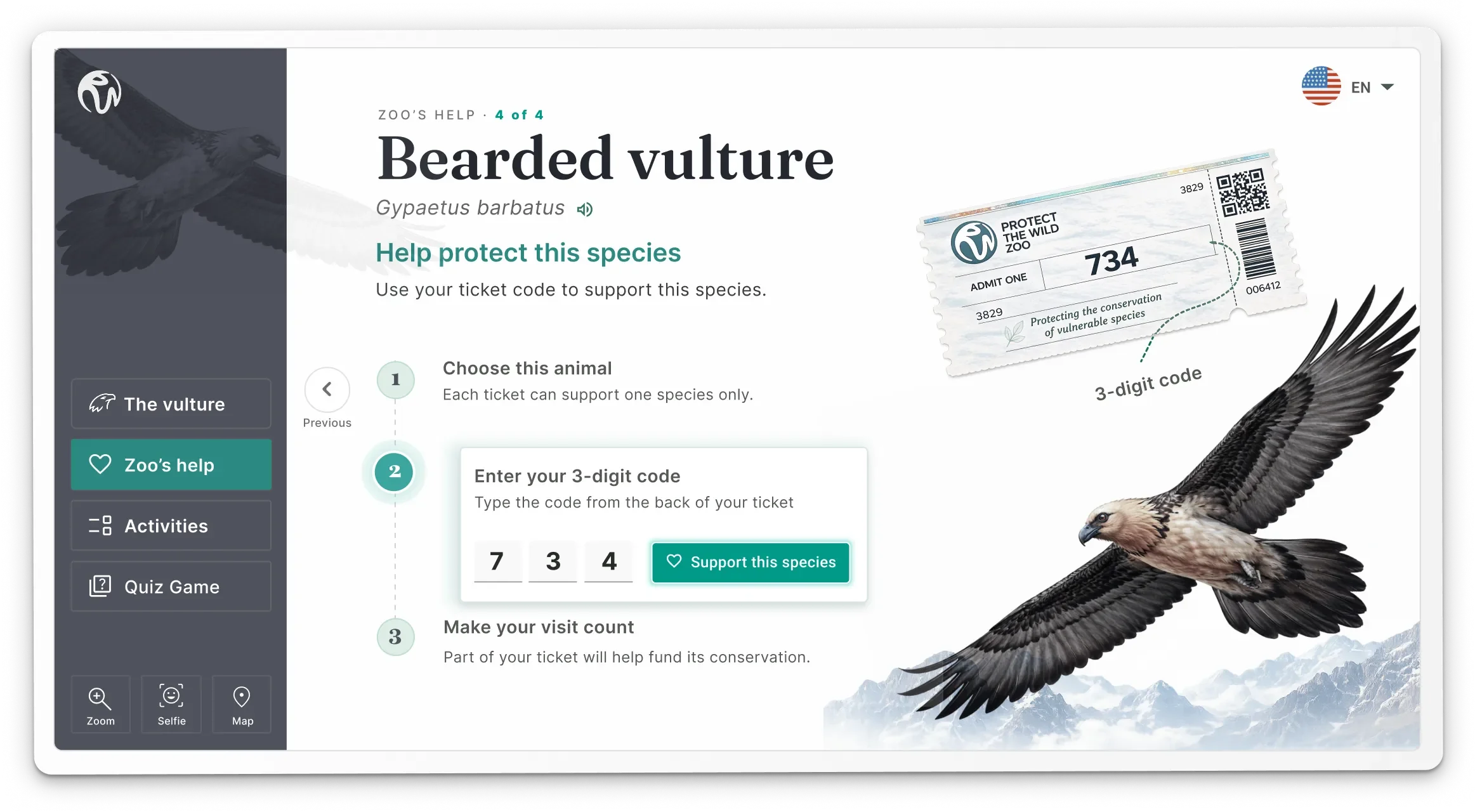
Turning awareness into action
The ticket-code flow turns a regular zoo visit into a simple conservation contribution.
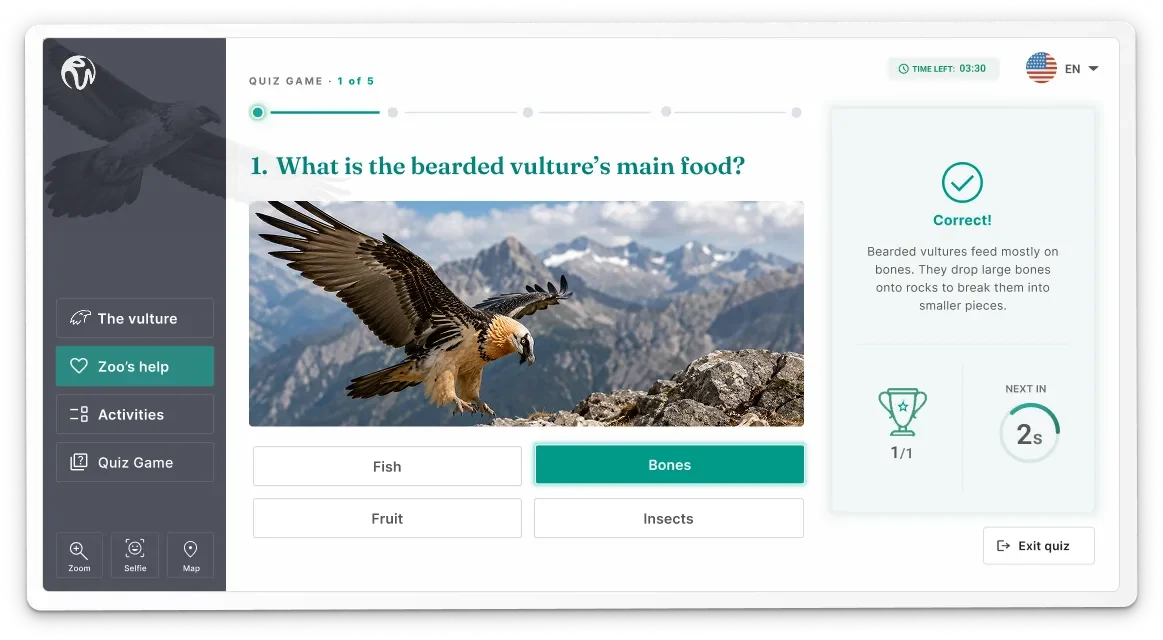
Reinforcing learning through play
The quiz turns learning into an active, memorable interaction.
Reflections
Redesigning Protect the Wild helped me turn an early concept into a more mature digital experience, focused on clarity, education and visitor engagement.
The project reinforced the importance of designing digital touchpoints within a wider physical journey, where context, timing and environment shape how people understand and engage with information.
Want to see the full design process?
Read the complete Medium case study to explore the research, decisions behind the project.